
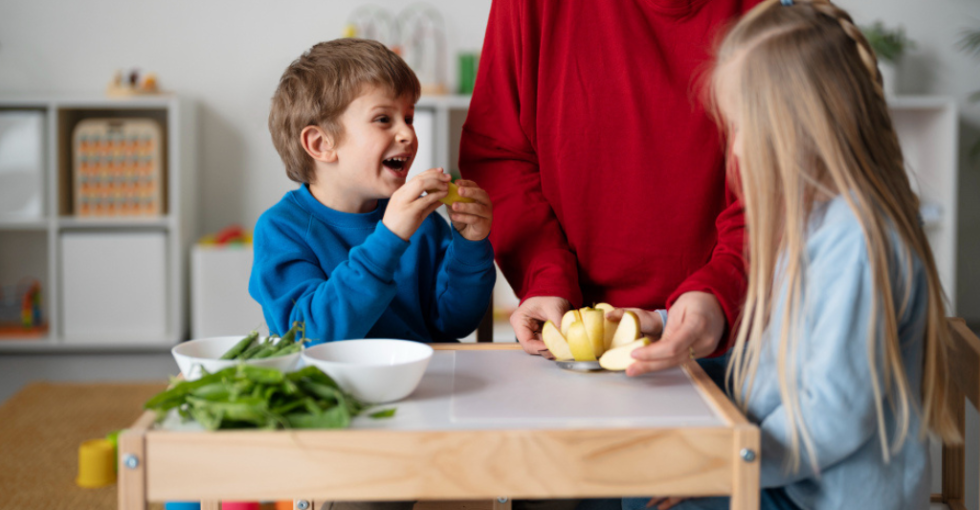

Young children grow fast, learn quickly, and use a lot of energy throughout the day. What they eat not only fuels their bodies but also affects their ability to focus, explore, and build lifelong habits. At Creative Daycare, we treat nutrition and food experiences as an important part of early learning. Families looking for a trusted Richmond daycare want a place where their children feel cared for in every way, and healthy eating is a meaningful part of that care.
Building Healthy Eating Habits from the Start
Healthy habits begin with positive exposure and consistent routines. At our centre, we introduce children to nutritious choices in ways that feel joyful rather than forced. One of our ongoing curriculum themes focuses on healthy eating, where children learn about all the major food groups through interactive and story-based activities.
Books play a big role in these lessons. Titles such as “I Will Never Eat Tomatoes” encourage children to try a small bite before saying no. “I Can Eat a Rainbow” teaches them to enjoy fruits and vegetables of different colours, while “The Little Red Hen” helps them understand how grains are used to make everyday foods like bread. Through these stories, children naturally begin to recognize and ask for healthy options both at daycare and at home.
We also talk about food in simple, friendly ways that help children understand how certain foods make them strong, energized, and ready to learn.
Hands-On Learning Through Seasonal Themes
Our food learning is not limited to books—it extends into hands-on experiences. Recently, during our winter theme, we explored the story “Stone Soup.” Children were invited to bring one vegetable from home, and together we made soup in the classroom. They watched the cooking process, learned how different ingredients come together, and proudly enjoyed several bowls of the soup they helped create.
To bring the story to life, we added props such as pretend vegetables, a pot, and a play campfire, allowing children to role-play the Stone Soup story. These activities helped children feel comfortable around vegetables, even ones they may not usually try at home.
Music and movement also support the theme. Through food-related songs, children use their bodies to move like different fruits—for example:
“Apple, apple, red and brown, jump up and down!” or
“Bananas are long and sweet, dance and move your feet!”
These moments add fun and reinforce healthy food concepts through rhythm and play.
Supporting Children With the Meals They Bring From Home
While we encourage healthy eating, we do not provide meals at the daycare. Instead, children bring snacks and lunches from home, and eating together allows them to learn from each other’s choices. Often, children become curious about foods they see their friends enjoying.
Educators also model healthy eating by sitting with the children and enjoying their own nutritious meals. These often include dishes from various cultures—such as Indian, Chinese, and Japanese cuisine—as well as diverse fruits like dragon fruit, coconut, and more. This exposure helps children appreciate a wide variety of flavours and food traditions.
Because every child is unique, their appetite and mood play a big role in how they eat. We support them using gentle, individualized strategies. Some children feel more relaxed with quiet music in the background, while others respond well to fun encouragement such as, “You’re a pasta monster—look how strong you’re getting!” Many enjoy imaginative bites where one bite becomes a “blue fish” and their mouth becomes a “shark,” or for dinosaur lovers, a triceratops or T-rex bite. We adapt based on what makes each child feel comfortable and confident.
Allergies and Special Dietary Needs
Food safety is a top priority, especially when it comes to allergies. We maintain clear records for each child and follow strict protocols to protect their well-being. If a child has an allergy, we place visual signs to inform parents, educators, and relief staff so that restricted foods are not brought into the daycare. The type of signage and precautions depend on the severity of the allergy.
This level of vigilance is one of the reasons families trust our Richmond childcare centre for daily care and support.
Encouraging Kids to Try New Foods
Trying new foods can be challenging for young children, but peer learning makes a big difference. When they see their friends tasting a new fruit or vegetable, they often feel inspired to try it too. We introduce new foods gently and repeatedly, giving children time to become familiar with them.
Mealtime as a Social and Learning Experience
Mealtime at Creative Daycare is more than just eating—it’s a space for learning important social and self-help skills. Children practice sitting together, having conversations, using utensils, cleaning up, and understanding simple table manners. These small routines help them build confidence, independence, and a sense of community.
Our educators support children with patience and encouragement, helping them learn these skills at their own pace.
How Creative Daycare Combines Care and Nutrition
At Creative Daycare, we believe nutrition is woven into every part of a child’s day. Through themed lessons, storybooks, hands-on cooking projects like our Stone Soup activity, cultural food exposure, and positive role-modeling during mealtimes, we help children build a healthy relationship with food.
Our supportive approaches—whether through songs, imaginative bites, or peer learning—ensure that every child feels encouraged and understood.
We also maintain strong safety practices, including clear allergy visuals and routines that protect every child’s dietary needs.
Our goal is to create an environment where children feel safe, confident, curious, and excited to learn—growing healthier and happier one day at a time.